25 years of Zubeidaa EXCLUSIVE: Khalid Mohamed, writer and son of Zubeida Begum, shares, “Not many theatres wanted to risk showing a ‘woman-centric’ film”; also reveals the film’s sequel based on his slain half-brother Rao Raja Hukam Singh never found takers
In the filmography of the late celebrated filmmaker Shyam Benegal, Mammo (1994), Sardari Begum (1996) and Zubeidaa (2001) stand out for they are a part of a trilogy on three Muslim women. The common factor among all three movies is that the titular character in each was inspired from three women related to veteran journalist Khalid Mohamed. While Mammo and Sardari Begum were inspired from his two grandaunts Mehmooda Begum and Bugam Akhtar, Zubeidaa was inspired from his mother Zubeida Begum, who was an actress. Mohamed served as a writer on all three films.
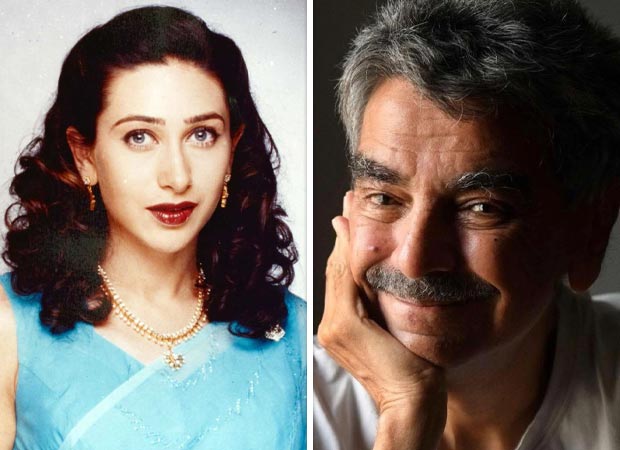
Zubeidaa saw Karisma Kapoor essay the titular character while it also starred Manoj Bajpayee, Rekha, Rajit Kapur and Surekha Sikri. As the film completed 25 years today, Khalid Mohamed opened up about various aspects related to it in an exclusive interview with Bollywood Hungama.
Even after 25 years, Zubeidaa continues to be appreciated. In all these years, what has been the most memorable reaction for this film that you have come across?
It’s only with the passage of time that Zubeidaa, as you say, is being ‘appreciated’. It’s to the credit and the courage of its producer Farouq Rattonsey that he did not pay any heed to the discouraging distributors, including, I think, Shyam Shroff. He said that it should be released only at a limited number of cinemas for morning shows, though he denies this. Moreover, the agent appointed by Faruq sir told me that not many theatre owners were willing to take the risk of showing ‘a woman-centric’ film.
Also after Zubeidaa became a favourite, especially women audiences, all OTT channels were refusing to acquire it for streaming. There’s a vicious system maybe that the top channels acquire films in a bulk from the mafia of go-betweens. They didn’t express the slightest interest, perhaps because pirated versions in hazy prints and many scenes missing had been uploaded by whoever indulges in such unethical if not illegal tricks on YouTube. At long last, it was sold for a piffling amount of money to YouTube, which is streaming Zubeidaa in a spanking new print, though I think it is divided into two parts, which makes no sense to me. Anyway such are the ’politics’ or maybe the avowed ‘policy’ of the channels. Mercifully, I’ve kept an original DVD print and digitalised it, so the film doesn’t vanish into a limbo. I just hope the National Film Archives, Pune has a proper print. Also, I’m baffled that the much-publicised Film Heritage Foundation of Shivendra Singh Dungarpur hasn’t lifted a finger to acquire a print of Zubeidaa, though I have called him several times.
Be that as it may, the most important – not memorable reaction comes from within myself, that, at least, I could narrate the story of my mother, whom I lost when I was two years old. Yet, I may add that the story of Zubeidaa (the extra ‘a’ was added by Faruq for numerological reasons) remains half-told. Why her son from the Maharaja of Jodhpur, Rao Raja Hukam Singh, my half-brother, was murdered decades ago is still cloaked in mystery. The case was shut without much of police investigation in Jodhpur. I wrote a script, a sequel to Zubeidaa – titled Rutba – which didn’t find any financial backing. Despite my continuous efforts with TV journalists in Mumbai and Delhi to probe into the murder, I failed countless times over. The slain Jessica Lal’s case in Delhi was re-opened after public and media protests. But I’ll have to be content or am helpless to rest with the thought, “No One Killed Hukam Singh”.
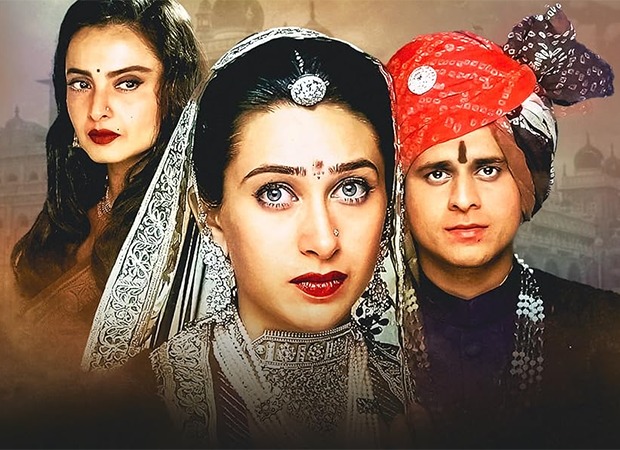
Zubeidaa completed a trilogy of films based on women from your life after Mammo and Sardari Begum. How does it feel when you think that these women from your family have become immortal through the medium of cinema?
I don’t know if ‘immortal’ is the right word. Countless number of significant films of the 1940s and ‘50s have been forgotten. For the time being, I’m most identified with Mammo, Zubdeidaa and also Fiza, which I directed myself, and am proud about for narrating the trauma among Muslim families of their sons going missing after the 1992-’93 communal riots of Bombay.
As for Sardari Begum, it is remembered largely because of its semi-classical music score by Vanraj Bhatia and the lyrics of Javed Akhtar. Even Benegal sir used to say, “I don’t know what, but there was something lacking in the final product.”
Secondly, it was wrongly thought to be a semi-fictionalised biopic of Begum Akhtar. Also frankly, I’d written the script with Dimple Kapadia in mind but she had nixed the offer for reasons best known to herself. Kirron Kher did a marvellous job in her place, but perhaps Dimple suited the role more, as her personality matched that of the real Sardari Begum, who lived in Chandni Chowk, Delhi. Anyway, I truly believe it was Dimple’s loss to miss out on working with Benegal sir.
What went through you while writing the script of these three films, especially Zubeidaa, considering their emotional importance for you?
Writing the scripts weren’t an emotional catharsis at all. It was effortless, I had practised writing scripts earlier – fictional ones. So when the real and the truth were with me, every moment came organically and fluidly. That’s why after the trilogy, I wondered if I could go out of myself and since I was a newspaper reporter, interviewed grieving mothers, for the lost and found department (it was barely functional) and made Fiza, an alter-ego of myself, searching for missing brother, patterned unconsciously on my half-brother Hukam Singh, whom I loved deeply only to lose him forever.
I had spoken to Mr Benegal five years ago when Zubeidaa had completed 20 years. He had said that he signed Karisma Kapoor for the titular role despite not having watched any of her films. What were his discussions with you regarding her casting?
I knew Karisma Kapoor ever since she was a child. Benegal sir was looking for an actress who could be both strong-willed and vulnerable. These qualities I’d seen in Karisma from close-up, especially in her beginning years when she had obviously gone through the repercussions of her parents’ separation. Karisma and I went over for lunch to Benegal sir’s home. She came without any make-up, wearing jeans and a white tee-shirt. Sir liked her instantaneously and was extremely pleased with her performance, which had a certain natural spontaneity and a firm spine behind it.
Rajit Kapur played Zubeidaa’s son, which was a character inspired by you. What was your reaction when you saw him enact the character on screen for the first time?
Rajit Kapur was already a part of the Benegal repertoire, and also experienced in theatre. So, I had no problems, except for one minor point; for one elaborate scene, he wore tacky denim jeans and a jacket, which I supposed is the misconception about how journalists dress. For the rest of the way, Rajit was very endearing, which is more than what I can say for myself.
The earlier two films in the trilogy Mammo and Sardari Begum had Benegal’s regular composer Vanraj Bhatia. What was the reason for bringing AR Rahman on board for Zubeidaa?
Vanraj Bhatia wasn’t at all happy about this, but both Benegal sir and Farouq felt that AR Rahman would give us a score that could mix the various Rajasthani folk and modern elements. I don’t think anyone but Rahman could have composed a more emotionally shattering theme song, used in the background score – ‘So gaye hain’– or the ‘mehndi’ song, which is still played at weddings. In fact, it was because of Rahman’s music that Farouq recouped a fair share of his investment, since it was bought by Sony Music at a premium price. Such commercial considerations apart, I still believe the music by Rahman and the costume designs by Pia Benegal contributed infinitely to the film’s overall impact.
Karisma Kapoor said in an interview in 2024 that Zubeidaa was the first sync sound film in India. What was this experience like for the people on set?
As far as I now, Benegal sir had always used sync sound, even though while shooting at Jogeshwari for Mammo, a new building was being constructed there. To avoid the noise, they worked during the early mornings and late at night. Maybe, it was Karisma’s first experience with sync sound.
Last year, you said in an interview that the journalistic fraternity was very negative towards your first directorial Fiza (2000). What were the reviews for Zubeidaa like back then?
The hostility towards Fiza from (my) own professional community was a nightmare. Lies were written, and the reviews, including one by Mr Subash Ghai, are something I’d rather forget, but not forgive.
As for the reviews of Zubeidaa, they were more cautious as it was Benegal sir’s film. The one I recall with gratitude was by Radha Rajadhyaksha in The Times of India. And in an aside, the supportive review by Deepa Gehlot on Fiza in Mid-day, besides a scathing letter to the editor about Mr Ghai’s review of sorts of Fiza. I presume the general attitude was how dare a critic who lambasts films dare to make a film himself. Their vain attempt was to make me taste my own medicine, which strikes me as both funny and ridiculous.
The post 25 years of Zubeidaa EXCLUSIVE: Khalid Mohamed, writer and son of Zubeida Begum, shares, “Not many theatres wanted to risk showing a ‘woman-centric’ film”; also reveals the film’s sequel based on his slain half-brother Rao Raja Hukam Singh never found takers appeared first on Bollywood Hungama.
from Bollywood Hungama https://ift.tt/Fb2RSYx


Comments
Post a Comment