Vishek Chauhan’s book Cinemas Forever reveals FASCINATING trivia – Before OTT changed the game, 3 Idiots sold 75,000-80,000 VCDs/DVDs, generating Rs. 3-4 cr; America sells more movie tickets than its population; India sells just 90 cr tickets annually
Vishek Chauhan, owner of Roopbani Cinema in Purnia, Bihar, has released a book called ‘Cinemas Forever’ by Notion Press. The unputdownable book takes readers through the history of cinema abroad and in India, and explains how movie theatres fought back against television, home video, streaming and even two pandemics, and yet continue to thrive. ‘Cinemas Forever’ is filled with fascinating information about the movie business and in this article, Bollywood Hungama lists out some of its most interesting takeaways.
One of the most startling portions of the book is its account of the golden age of theatrical moviegoing in the United States. In 1947, there were as many as 18,000 theatres in the US. Cinema, at that point, was not merely a form of entertainment; it was the third largest retail business in the country after groceries and automobiles.
The scale of attendance was staggering. Around 90 million Americans – nearly 60% of the country’s population – went to the movies every week. The US box office reached its historic peak in 1947, with 4.7 billion tickets sold in a single year.
But the very same year also marked the beginning of a new disruption. Around 1 million American households owned a television set in 1947. By 1950, the number had jumped to 4 million. By 1954, it had exploded to 26 million. And by 1962, there were 55 million TV sets in the country, penetrating more than 90% of households.
The impact on theatres was brutal. Annual box office revenue in the US fell from $1.72 billion in 1946 to $1.4 billion in 1950, $1.1 billion in 1955 and $927 million by 1962. Ticket sales also collapsed – from 4.7 billion in 1947 to 3.02 billion in 1950, 2.2 billion in 1955 and barely 1 billion by 1970. In other words, within 23 years, US theatrical admissions suffered a massive 75% fall.
The first multiplex of the world
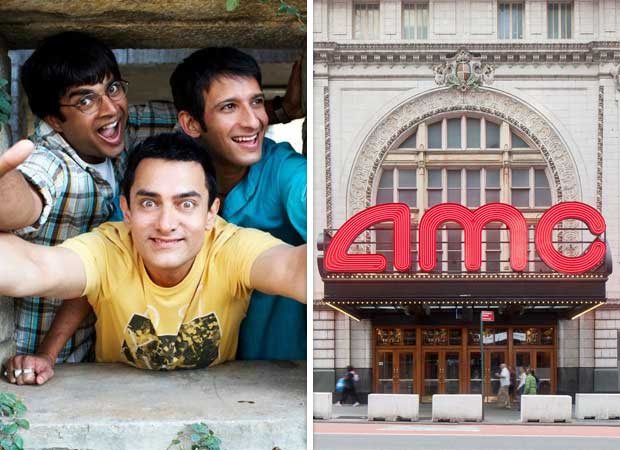
Weekly movie attendance too crashed dramatically – from 90 million in 1947 to 46 million in 1955 and just 17 million by 1970. Yet, as ‘Cinemas Forever’ shows, every disruption also forced the exhibition business to reinvent itself. One such reinvention came in the form of the multiplex. Stanley Durwood, the visionary behind AMC, started the first widely recognized multiplex in 1963 in Kansas City, Missouri. Interestingly, Sumner Redstone of National Amusements is said to have coined the word ‘multiplex’.
The multiplex changed the business because it allowed exhibitors to run multiple films under one roof, maximize real estate and offer audiences more choice. Decades later, the multiplex model would also transform urban India, especially after liberalization. But Vishek Chauhan’s book also makes a crucial point: India’s future cannot depend only on luxury multiplexes.
India’s exhibition woes
India, despite its vast population of 1.4 billion, sells close to 90 crore movie tickets annually. By contrast, the United States in 2024 sold around 2.5 times its population in admissions – more than 800 million tickets on a population of around 340 million. If India were to even come close to that per-capita moviegoing habit, the country could potentially sell at least 350 crore tickets annually – nearly four times the current level.

Vishek Chauhan notes that the problem is not the lack of love for cinema. The problem is access. India has around 9,700 screens. The US sustains around 42,000 screens. China, with a population comparable to India’s, has nearly 81,000 screens. Even South Korea, a country of just 52 million people, has more than 2,700 screens. These numbers make India’s under-screening problem impossible to ignore.
Vishek Chauhan suggests, “The industry therefore needs to urgently rebalance. The future cannot rest solely on luxury multiplex chains. India needs another 20,000-30,000 theatres, especially affordable, community-focused cinemas that can reconnect the audiences in small towns, tier-3 cities and rural belts. These new-age value cinemas do not need to mimic the luxury template of PVR and Inox; instead, they must focus on accessibility, affordability and volume. The priority should be low operating costs, smart digital distribution, lean staffing and tiered ticket pricing that allows the lower strata to return to the theatrical ecosystem.”
The India Story
The book also offers valuable historical context on India’s own exhibition growth. By 1950, India had 2,394 permanent cinemas and another 844 temporary cinema set-ups, making it a total of 3,348 theatres nationwide. By 1971, this number had jumped to 6,987. At the time, India had around 1.27 theatres per lakh population – a remarkable density for a country still struggling with poverty and infrastructure challenges.
By 1973, Tamil Nadu alone had 1,238 theatres, followed by Andhra Pradesh with 1,122 theatres. Together, the two southern states accounted for nearly 30% of all screens in India. It is another reminder of how deeply theatrical culture was embedded in the South – a culture that continues to reflect in the strong box office openings of Tamil, Telugu, Malayalam and Kannada cinema even today.
Home video: The OTT of the bygone era
Another fascinating section of ‘Cinemas Forever’ deals with home video. In 1948, 100% of film monetization came from theatres. Fifty years later, by 1998, the theatrical share had dropped to just 19%, as several new revenue streams had emerged.
Home video became a major force. Revenues from this segment jumped nearly ten times between 1980 and 1985. By 1990, they had more than doubled again from the 1985 figures. This changed the way films were produced, marketed and recovered financially.
The book notes that directors and producers were often encouraged to tailor films for the small screen. As films began to be designed to look good on television screens, cinematography and storytelling also changed. There were more close-ups and fewer expansive wide shots. Some filmmakers and cinematographers worried that cinema was losing its grandeur and visual complexity because films were increasingly being shot with television-sized screens in mind.
In India, too, the home video era became an important revenue source. In the 2000s, home video could contribute anywhere between 10% and 20% of a film’s overall recovery. Blockbusters earned even more. A film like 3 Idiots (2009) reportedly sold more than 75,000 to 80,000 VCDs/DVDs shortly after release, generating around Rs. 3-4 crore in revenue.
For mid-budget films, the window between theatrical release and home video release also began shrinking. Kalyug (2005), for instance, was released on VCD and DVD just six weeks after its theatrical debut. This soon became a common strategy for films trying to maximize recovery quickly.

Streaming and pandemic challenges
The next big challenge came from streaming. In 2009, the US and Canada sold 1.49 billion tickets. By 2019, the number had fallen to 1.24 billion. During the same decade, Netflix’s rise was extraordinary. The platform had around 12 million US subscribers in 2009. By the end of 2014, it had grown to roughly 38 million. By the end of 2019, Netflix had crossed 60 million subscribers in the United States and 160 million worldwide.
Again, cinema was forced to confront the question: would audiences still leave their homes for a movie?
The answer came after the pandemic in a surprisingly emotional way. Vishek Chauhan’s own experience as an exhibitor gives the book its most personal and moving passages. He recalls how, after the long uncertainty of shutdowns and restrictions, Spider-Man: No Way Home (2021) became a turning point.
He wrote, “The distributor told me, ‘Open the bookings for Spider-Man: No Way Home’. The command felt more like an invitation back to a world we feared lost. He added, ‘And check the advances across Bihar’. What greeted me was nothing short of miraculous…Patna, alongside other centres in Bihar, was ablaze with activity. The metros were in a league of their own, with IMAX screenings across the country sold out, days before the premiere. The moment my theatre’s bookings were activated, it was as though a dam had burst. Seats filled up with incredible speed, a testament to the pent-up yearnings for the collective magic of cinema.”
He added, “Though Sooryavanshi’s (2021) Diwali release had been a beacon of light, logistical delays had tampered with our celebration, keeping us from opening bookings until the very last minute. But Spider-Man: No Way Home was rewriting the script…”
It was proof that the hunger for collective cinema had not died. It had only been waiting for the right film and the right moment. Before that, Godzilla vs. Kong (2021) had already given an early signal of revival. Vishek recalled, “Godzilla vs. Kong drew crowds, the likes of which hadn’t been seen for what seemed like an eternity…my own theatre was a testament to this revival, with the sound of packed morning show audiences resonating like a long-lost melody.”
To conclude
That, ultimately, is the core idea of Cinemas Forever. Every few years, cinema is declared finished. Television was supposed to kill it. Home video was supposed to kill it. Satellite television was supposed to kill it. Streaming was supposed to kill it. The pandemic was supposed to be the final blow.
And yet, theatres continue to survive because they offer something no device can fully replicate – the collective emotion of watching a story unfold with strangers in the dark.
For India, the message is even more urgent. The audience is there. The appetite is there. The emotional connection is there. What is missing is adequate, affordable and accessible infrastructure. If India solves its screen shortage and builds theatres for the masses — not just for the elite urban audience — the country’s theatrical market could expand several times over.
Cinemas Forever is, therefore, not just a nostalgic look at the past. It is also a timely reminder that the future of cinema will not be decided only by content, stars or streaming platforms. It will also be decided by how many people can actually access the magic of the big screen.
The post Vishek Chauhan’s book Cinemas Forever reveals FASCINATING trivia – Before OTT changed the game, 3 Idiots sold 75,000-80,000 VCDs/DVDs, generating Rs. 3-4 cr; America sells more movie tickets than its population; India sells just 90 cr tickets annually appeared first on Bollywood Hungama.
from Bollywood Hungama https://ift.tt/2CbuiU1


Comments
Post a Comment